Your First Driving Lesson: What Happens, Minute by Minute
Pickup, the permit check, seat and mirror setup, the dual-control car, quiet streets and the written notes afterward. A first lesson in Chico, minute by minute.
 Stallion School of Driving instructors · Chico, CAUPDATED · OCT 3, 2026 · CHECKED AGAINST CA DMV SOURCES OCT 4, 2026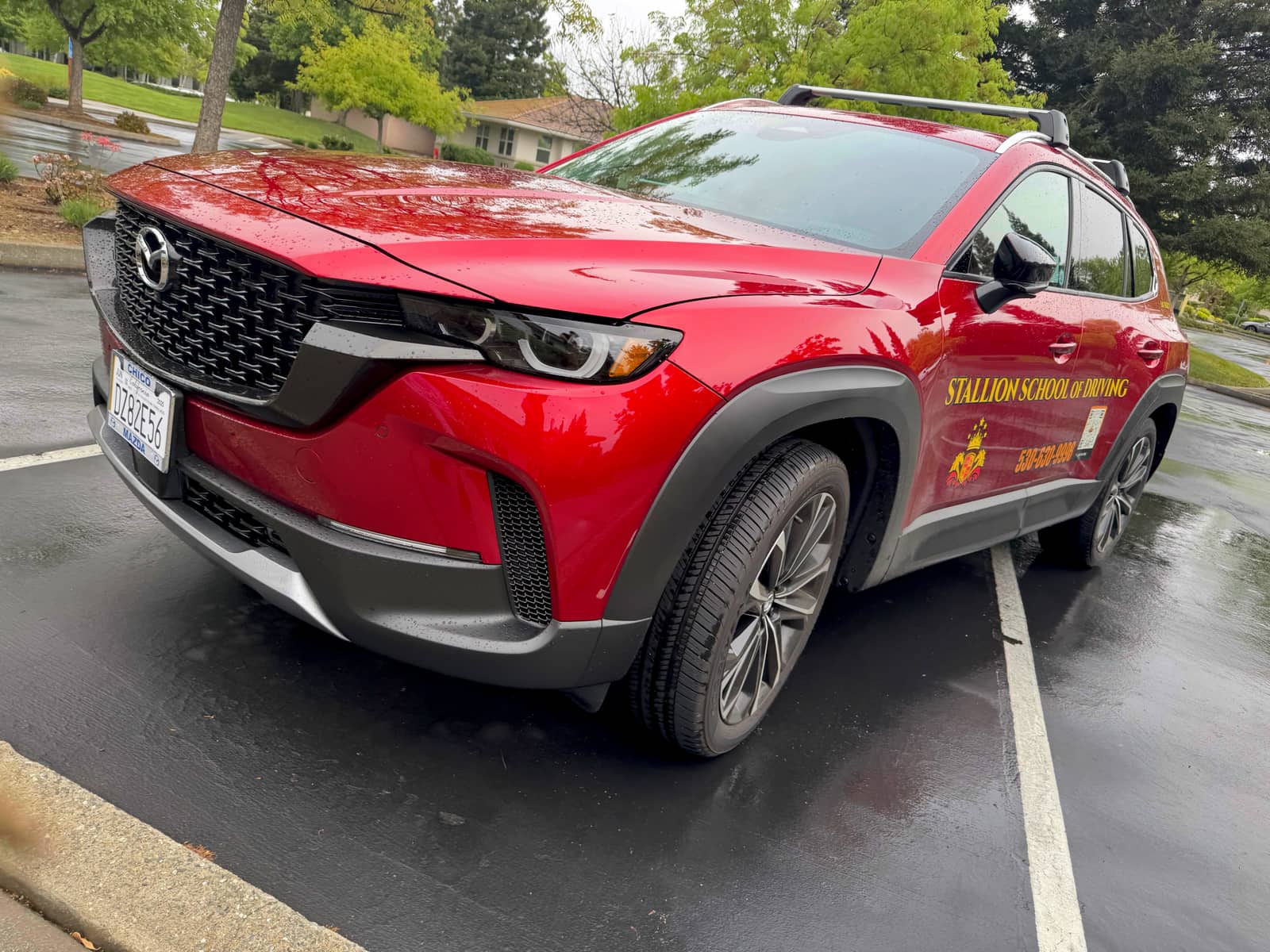
A first lesson with us is two private hours. The instructor picks the student up, checks the original permit, sets up the seat, mirrors and controls, and then drives quiet residential streets for stops, turns and steering. Afterward, written notes go to your account: what went well, what to practice, and what the next lesson will focus on. Here is how those two hours usually go.
Before the day
For teens, the most important rule comes from the DMV. Under 18, you wait to use your instruction permit until you start behind-the-wheel training with an instructor who validates it. The DMV’s driver training schools page says the permit becomes valid once it is signed by a professional driving instructor after at least one hour of behind-the-wheel training. So the first lesson usually comes before any practice with a parent, not after.
When you book, you enter the permit details in your account: number, issue date and expiration date. A permit photo is optional but speeds up approval. The instructor still checks the original permit in person.
- Bring: the original permit (or license), glasses if the permit lists them, and closed-toe shoes. Your reminder the day before lists the same three things.
- Leave home: flip-flops and heavy boots. Thin, flat soles let you feel the pedals.
- Arrive rested and fed. Illness, extreme fatigue or medication effects can make a lesson unsafe.
- Parent riding along? You can when a seat is available. Tell us when you book.
These rules exist for safety, and they are firm. A missing or expired permit, missing glasses that the permit requires, or unsafe footwear means the student cannot drive, and the lesson counts as used. Put the permit with the shoes the night before. The full readiness rules are on our safety policy page.
The two hours, step by step
Times are approximate. Every student is different, and the instructor adjusts the plan to the person in the driver’s seat.
| Time | What happens | What the instructor watches |
|---|---|---|
| Before pickup | You get a message that the instructor is on the way, with an arrival estimate | Be ready at the pickup address with the original permit |
| 0:00 | Pickup at home, school, work or our Chico office, or the meeting point in Oroville and Gridley–Biggs | Permit, glasses, shoes |
| 0:05 | Permit check and a short talk about goals and any driving so far | How the student feels, so the pace fits |
| 0:10 | Seat, mirrors, seat belt and the controls, including the instructor’s brake | A setup the student can repeat alone |
| 0:20 | First movement on a quiet street: easing off the brake, gentle gas, stopping at a chosen point | Pedal feel, where the eyes are |
| 0:35 | Residential streets: right turns, left turns, stop signs, lane position | Full stops, scanning, turn speed |
| 1:15 | More repetitions, or a little more traffic if the basics are steady | Whether to add a step or repeat one |
| 1:45 | Quick review in a safe spot, then drop-off in the same town | What the student can explain back |
| After | Lesson notes are posted to your account, and you get a message when they are ready | The plan for lesson 2 |
Running late? Up to 10 minutes, the instructor uses the buffer when it is safe. After that, only actual driving time counts, and more than 25 minutes late is a no-show. For a minor, a parent authorizes any drop-off other than home.
The dual-control car
Our training cars are SUVs with an instructor brake: a second brake pedal on the passenger side, so the instructor can stop the car at any moment. They are a 2025 Mazda CX-50 and a 2025 VW Atlas Cross Sport, both IIHS Top Safety Pick+.
New drivers sometimes worry that the instructor using the brake means they failed. It does not. It means the instructor saw something early and kept the lesson safe, which is the job. Ask the instructor what they saw. The answer becomes the next thing to practice.
Seat, mirrors and hands: the setup we teach
Ten minutes on setup saves hours later, because a driver who cannot reach the pedals comfortably or see behind them is working twice as hard.
- Seat: close enough to press the brake all the way with a slight bend in the knee, and your back against the seat.
- Wheel: both hands on the outside of the wheel, arms relaxed and slightly bent.
- Inside mirror: framing the whole back window.
- Side mirrors: angled out until your own car barely shows at the edge, so they cover more of the lanes beside you.
- Blind spots: the areas mirrors do not show. You check them by turning your head over your shoulder, every time you change lanes, merge, back up or pull from the curb.
Mirrors are also on the DMV’s pre-drive check before every drive test, so this is the first test skill your teen learns.
What the instructor watches, and how they coach
The first lesson is mostly about two things: smooth control and where the eyes go. New drivers look at the hood. We move their eyes 12 to 15 seconds down the road, and the DMV handbook asks for at least 10. Once the eyes go further ahead, the stops get smoother and the steering calms down.
We use commentary driving from day one. The student says what they see and what they will do: stop sign ahead, slowing now, parked car on the right. It sounds odd for a minute, then it becomes natural, and it lets the instructor correct the thinking, not only the steering.
A common first-lesson moment: the first right turn swings wide. The fix is usually speed. Slow down before the turn, look where you want to go, and let the wheel return through your hands. The next turn is almost always better. Our instructors coach in short, calm phrases and never shame a mistake. You can read the full method on how we teach.
The car pulled up, clean and professional, with a kind instructor who put my daughter at ease. I watched them drive off with full trust.
Monica S., parent, Chico (Google review)
In Chico, the first lesson usually means quiet streets
Chico first lessons usually stay on residential streets near Bidwell Park. Busier roads come later in the sequence: the Esplanade and East Avenue for lane choice and signals, then downtown and CSU Chico for pedestrians and cyclists, then Highway 99 once the student is ready. In the teen 6-hour training, lesson 2 adds traffic, lane changes and intersections, and lesson 3 adds highway merging and a mock drive test. Our Chico roads guide explains the order.
After the lesson: the notes
Each lesson ends with a structured 23-section evaluation, and the notes are posted to your account. They tell you what went well, what to practice and the focus for next time. Parents, this is your practice plan. Pick one item and practice it in the days before the next lesson.
A student’s lessons are at least two days apart, so there is always time for that practice. Your instructor may also save a time for the next lesson; it stays saved for 24 hours for you to confirm. Teens need 50 hours of supervised practice, 10 at night, with a licensed driver 25 or older. The practice log in your account is a convenience. The parent still certifies the hours for the DMV.
First lesson as an adult
Adults bring a valid California instruction permit or license. The instructor starts by asking about your goals and your driving so far, then spends the full two hours driving with you. If you have driven before, the plan moves faster: the setup is the same, but the instructor may spend more of the time on the roads or skills you named, such as freeway merging or parking. See adult driving lessons.
Quick answers
What do I need for my first driving lesson? The original permit or license, glasses if the permit lists them, and closed-toe shoes.
Can my teen practice with me before the first lesson? The DMV says teens wait to use the permit until behind-the-wheel training starts with an instructor who validates it.
Will my teen drive in traffic on the first lesson? Usually not much. First lessons focus on quiet residential streets, stops and turns.
What do parents get after the lesson? Written notes in your account on what went well, what to practice and the next focus.
How long is the first lesson? Two hours, private, with one instructor.