California Permit Test Practice: Road Signs, Lines and Signals
California permit test practice from the DMV handbook: road signs, lane lines, curb colors and signals learned as a system, plus a simple seven-day study plan.
 Stallion School of Driving instructors · Chico, CAUPDATED · OCT 3, 2026 · CHECKED AGAINST CA DMV SOURCES OCT 4, 2026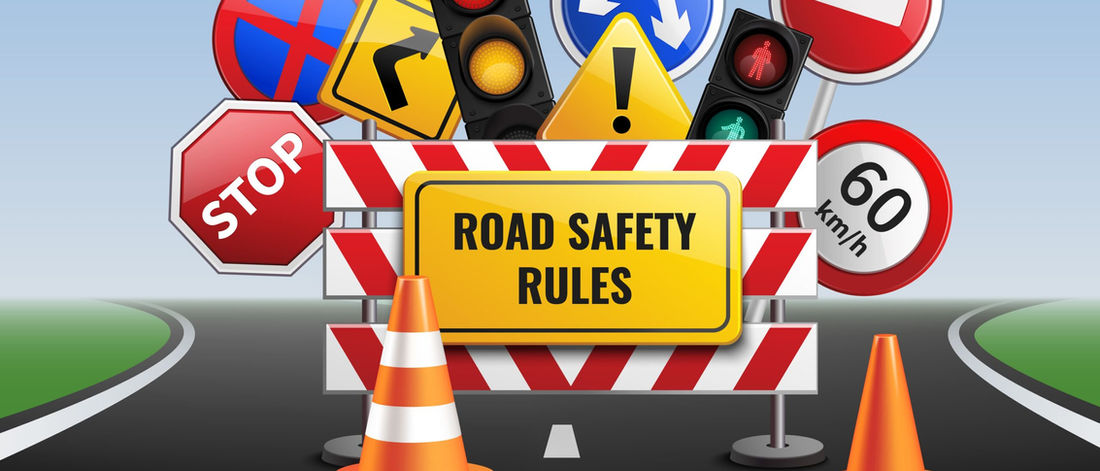
The best California permit test practice is the DMV’s own material. Every question comes from the California Driver’s Handbook, each has one correct answer, and you pass with a score of 80%. Road signs, lane lines, curb colors and traffic signals are some of the easiest points to win if you learn them as a system: the shape and color of a sign tell you what kind of message it is before you read a word.
How many questions are on the California permit test?
The DMV’s current pages give the passing standard rather than a fixed question count. Its learner’s permit page says the test is multiple choice, based on the handbook, and that a passing score is 80%. Its provisional licensing fact sheet for teens (FFDL 19) says that to pass, you may miss no more than 8 questions.
A few more facts from the DMV that help you plan:
- Attempts: you get three attempts to pass the knowledge test before you must reapply.
- Waiting after a fail: minors wait seven days, not counting the day of the failed test, before retaking it.
- No aids: you cannot use a handbook or a phone during the test.
- Timing: the permit page says tests are not available at DMV offices after 4:30 p.m., so book an earlier appointment.
- The questions: the DMV says there will be one correct answer, the other choices will be clearly wrong or not right for the question, and there are no trick questions.
California road signs and meanings
Learn the sign families by shape and color first; the individual signs then make sense.
| Sign | What it means | What you do |
|---|---|---|
| STOP sign | Full stop required | Stop at the limit line, or before the crosswalk, or before the intersection if neither is marked. Check all directions |
| Red YIELD sign | Others may have the right-of-way | Slow down and be ready to stop for vehicles, bicyclists or pedestrians |
| Red and white regulatory sign (such as DO NOT ENTER) | A rule you must follow | Do what it says. DO NOT ENTER means do not enter that road or ramp |
| WRONG WAY sign | You are driving against traffic | When safe, back out or turn around. At night, road reflectors shining red are another clue |
| Red circle with a red line through it | The action pictured is not allowed | Do not make that turn or movement |
| Yellow and black round sign, or X-shaped sign | Railroad crossing ahead | Look, listen, slow down and prepare to stop |
| Five-sided sign | You are near a school | Drive slowly and stop for children in the crosswalk |
| Diamond-shaped sign | A warning about road conditions or dangers ahead | Slow down and look for the hazard |
| White rectangular sign | A rule you must obey | Obey it |
Two handbook rules are worth memorizing, because they answer many questions at once: obey all warning signs regardless of their shape or color, and when a traffic light is not working, stop as if the intersection had STOP signs in all directions.
Lane lines: yellow vs white, solid vs broken
The short version: yellow lines separate opposite directions, white lines separate lanes going the same way, and broken lines may be crossed when it is safe. The details are where test questions come from:
| Line or marking | What it means | What you do |
|---|---|---|
| Single solid yellow line | Center of a two-way road | Do not pass if you have only one lane your way and the solid line is on your side |
| Double solid yellow lines | No passing in either direction | Stay right of them. You may cross to turn left into a driveway or private road, or make a legal U-turn |
| Two sets of double yellow lines, 2 or more feet apart | A barrier | Never drive on or over it, turn left across it, or U-turn across it, except at marked openings |
| Broken yellow line on your side | Passing allowed | Pass only when it is safe |
| Single solid white line | Lanes going the same direction, including one-way streets | Change lanes with care |
| Double solid white lines | A lane barrier, such as at a carpool lane or near ramps | Never change lanes across them |
| Broken white lines | Lanes going the same direction | You may change lanes when it is safe |
| A solid outer line and a broken inner line on each side | A center left turn lane | Use it only to prepare for a left turn or U-turn, for no more than 200 feet |
| Wide white line before an intersection | A limit line | Stop behind it |
| Row of white triangles | A yield line | Yield or stop there; the triangles point toward you |
| White crosswalk lines (yellow near schools) | A crosswalk | Pedestrians have the right-of-way in marked and unmarked crosswalks |
The double-line rules are also written into Vehicle Code section 21460, which says you may not drive left of double solid yellow lines or cross double solid white lines, with exceptions for left turns into driveways and legal U-turns.
Curb colors in California
Curb colors matter on both tests: the DMV lists ignoring curb markings among the drive test’s Critical Driving Errors.
- Red: no stopping, standing or parking. Buses may stop at a red zone marked for buses.
- Yellow: stop only to load or unload passengers or freight, for no longer than the posted time.
- White: stop only long enough to pick up or drop off passengers.
- Green: park for a limited time, shown on a sign or painted on the curb.
- Blue: parking for a disabled person, or someone driving a disabled person, with a placard or special plate.
Three distances come up often: never park within 15 feet of a fire hydrant, within 20 feet of a crosswalk (15 feet where there is a curb extension), or within three feet of a sidewalk ramp for disabled persons.
Traffic signals: solid, flashing and arrows
Signal questions test whether you know a solid light from a flashing light or an arrow.
- Solid red: stop. You may turn right after a full stop unless a NO TURN ON RED sign is posted.
- Red arrow: stop, and do not turn until a green light or green arrow appears.
- Flashing red: stop. After stopping, go when it is safe.
- Solid yellow: the light is about to turn red. Stop if you can do so safely.
- Yellow arrow: the protected turn is ending.
- Flashing yellow: proceed with caution. You do not need to stop.
- Flashing yellow arrow: you may turn left after yielding to oncoming traffic. The turn is not protected.
- Solid green: go, but yield to anyone already in the intersection.
- Green arrow: a protected turn in the direction of the arrow.
- Flashing DON’T WALK: pedestrians should not start crossing, but drivers must still yield to anyone in the crosswalk.
What to bring to the permit test
Under 18, you must be at least 15½. The DMV’s permit page lists what to have ready: a Certificate of Completion of driver education, your completed application signed by your parent or guardian, proof of identity and residency, and the application fee. At the office you pass a vision exam, have your photo taken and take the knowledge test. The DMV’s Teen Driver Roadmap adds that a parent or guardian needs to be with you at the appointment, and that you and your parent each need your own MyDMV account to start and approve the application online.
See our guides to the DL 400C certificate and the teen permit timeline.
How online driver education prepares you
Our online course, Stallion Drivers Ed Academy, is DMV-licensed driver education for California teens. It is 30 hours, self-paced and 100% online, so it can be done on a phone or a computer. It includes quizzes, videos and practice tests that prepare students for the DMV written test, and it ends with the DL 400C Certificate of Completion that you bring to the DMV for your permit. When your permit is in hand, the same team teaches the 6 hours of behind-the-wheel training.
California permit test practice: a seven-day study plan
The DMV suggests giving yourself a few days to get through the handbook. Here is a simple plan for the week before your appointment, after driver education is finished:
- Day 1: signs. Read the traffic control part of Section 7, then quiz yourself with the sign table above.
- Day 2: lines, lanes and turns. Section 6. Sketch a road and label every line.
- Day 3: right-of-way, signals and parking. Section 7 and the parking part of Section 6, including curb colors and distances.
- Day 4: safe driving. Section 8: following distance, speed and weather.
- Day 5: practice tests. Take the DMV’s sample Class C knowledge tests. For every miss, find the page in the handbook and read the whole paragraph.
- Day 6: weak spots. Reread what you missed, then take another sample test.
- Day 7: light review. Skim the tables, gather your documents and sleep. On test day, read each question all the way through.
If you miss a question at the DMV, the DMV says staff can tell you which handbook page has the answer.
How we teach it
Knowing a sign on paper and reading it at 35 mph are different skills. In our lessons, students use commentary driving to name signs and road paint out loud: "flashing yellow arrow, yield to oncoming," "red curb, no stopping," "school sign, 25 when children are present." That turns permit-test facts into driving habits, which matters because the DMV fails a drive test for ignoring lane markings, painted arrows or curb colors.
For teens, the permit is not valid for driving until you start behind-the-wheel training with an instructor who validates it, so the first teen driving lesson is where the permit starts working. Bring the original permit to every lesson.
Quick answers
How many questions are on the California permit test? The DMV’s current pages give the passing score instead of a fixed count: you need 80%, and the DMV’s teen fact sheet says you may miss no more than 8 questions.
How many times can you take the permit test in California? Three attempts before you must reapply. Minors wait seven days after a failed test, not counting the test day.
What is the best DMV written test practice for California? The California Driver’s Handbook and the DMV’s sample Class C knowledge tests. Every test question comes from the handbook.
What does a five-sided sign mean? You are near a school. Drive slowly and stop for children in the crosswalk.
How do you pass the permit test in California? Study the DMV handbook section by section, take the DMV’s sample tests, look up every missed question in the handbook, and read each question all the way through on test day. You need 80% to pass.
Sources
- Section 7: Laws and Rules of the Road - California DMV
- Section 6: Navigating the Roads - California DMV
- Section 6: Navigating the Roads (Continued) - California DMV
- Section 3: The Testing Process - California DMV
- Instruction and Learner's Permits - California DMV
- Fast Facts: Provisional Licensing (FFDL 19) - California DMV
- Prepare for Knowledge and Drive Tests - California DMV
- Sample Driver's License Knowledge Tests - California DMV
- Teen Driver Roadmap - California DMV
- Section 2: Getting an Instruction Permit and Driver’s License - California DMV
- Driving Performance Evaluation (DPE) Scoring Criteria - California DMV
- California Code, VEH 21460 - California Legislative Information