Tule Fog Driving Tips, Plus Rain and Night Driving in the Valley
Tule fog driving tips: low beams, slower speed and a bigger gap. Rain and night driving use the same habits, and California ties your headlights to your wipers.
 Stallion School of Driving instructors · Chico, CAUPDATED · OCT 3, 2026 · CHECKED AGAINST CA DMV SOURCES OCT 4, 2026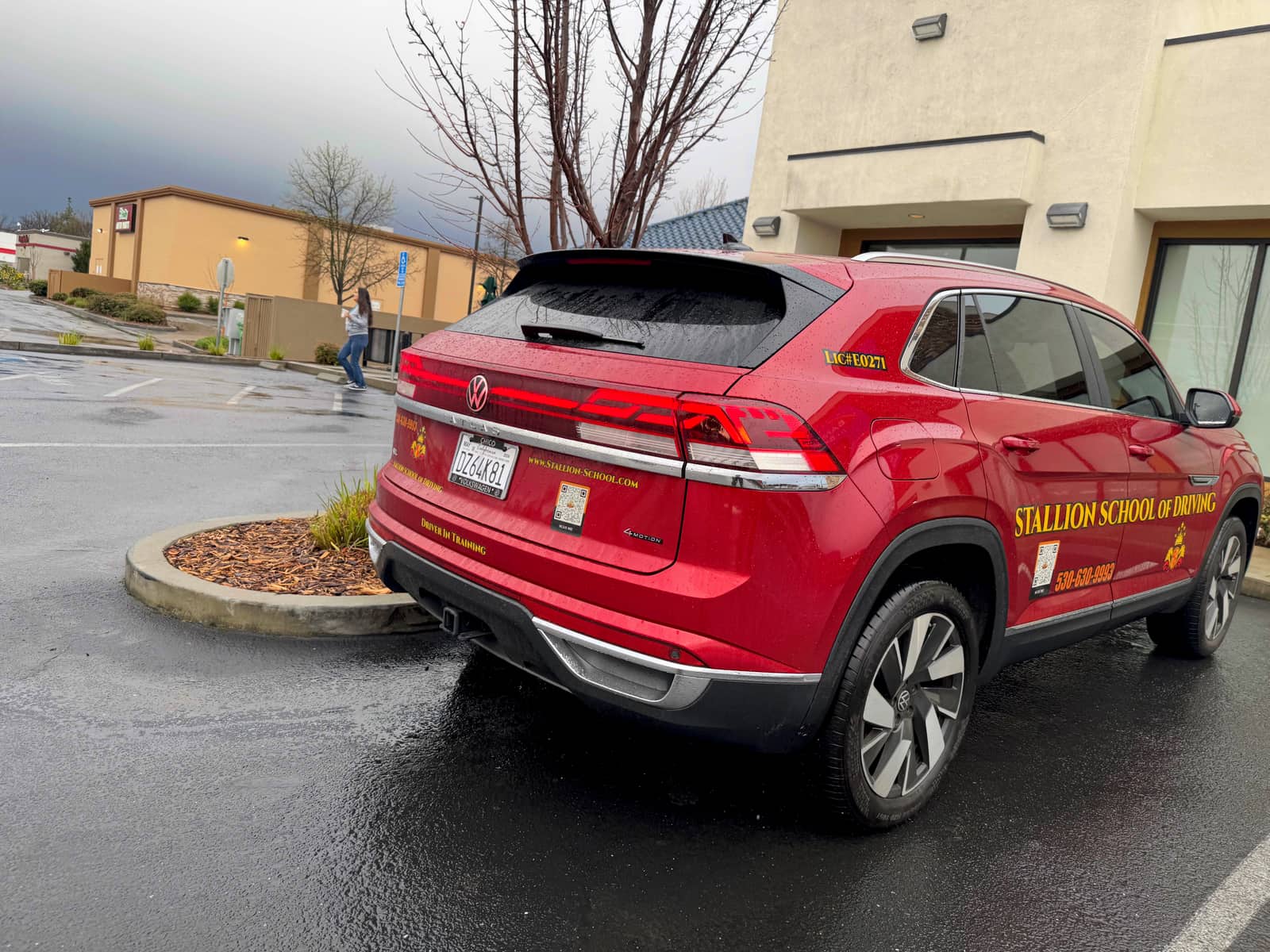
Tule fog driving tips come down to three habits: use your low-beam headlights, drive slowly enough to stop within the distance you can see, and leave a much bigger gap to the car ahead. Rain and darkness ask for the same habits. California law also ties your lights to your wipers: if the weather needs your wipers on continuously, it needs your headlights on too.
What is tule fog?
The National Weather Service defines tule fog as "radiation fog in the Central Valley of California." Its glossary says it "forms during night and morning hours in late fall and winter months following the first significant rainfall," and calls it "a leading cause of weather related casualties in California."
For families in Chico, Durham, Gridley, Biggs and Orland, that means the season to plan for is late fall through winter, and the hours to watch are nights and mornings. Early drives to school and late drives home fall right in those hours.
Tule fog driving tips: what the DMV and CHP advise
For driving in fog in California, the DMV handbook’s first advice is to avoid driving in heavy fog, and to consider postponing your trip until it clears. If you must drive, it gives a clear list:
- Drive slowly and make sure you can stop within the space you can see ahead.
- Use your low-beam headlights. Never drive with only your parking lights or fog lights.
- Increase your following distance.
- Use your wipers and defroster as needed.
- Avoid crossing lanes or passing unless it is absolutely necessary.
- Listen for traffic you cannot see.
- If the fog becomes too thick, consider pulling off the road, turn on your emergency flashers, and wait for it to improve.
The National Weather Service office in Sacramento shares fog tips from the California Highway Patrol on its fog safety page. Two are worth teaching every new driver. First, watch your speedometer, because fog creates a visual illusion of slow motion when you may actually be speeding. Second, travel with the driver’s window partly open so you can hear traffic. The same page says to watch for CHP pace cars. The handbook also describes traffic breaks, which officers use to slow traffic during heavy fog: the officer turns on emergency lights and weaves slowly across lanes. Turn on your flashers, slow down gradually to the officer’s speed, and do not pass the patrol car.
Why low beams, not high beams, in fog
It feels natural to reach for more light. In fog, more light makes things worse. The handbook says high beams reflect back and cause glare, and the CHP tips describe it as a "white wall" effect. Fog lights alone are not enough either: the handbook says never drive using only your parking or fog lights.
California headlight law: wipers on, headlights on
California Vehicle Code section 24400 requires a car to be driven with at least two lighted headlamps during darkness or inclement weather. It defines inclement weather two ways: a condition that keeps you from clearly seeing a person or another vehicle 1,000 feet away, or a condition that needs your windshield wipers in continuous use because of rain, mist, snow, fog or other moisture. The handbook says it plainly: if you need your wipers because of fog, rain or snow, you must turn on your low-beam headlights.
The handbook also says to use headlights from 30 minutes after sunset until 30 minutes before sunrise. And this rule matters on test day: the DMV lists failing to use the wipers, defroster or headlights when weather or darkness requires them as a Critical Driving Error, which fails the drive test on its own.
| Condition | What the DMV handbook says | What you do |
|---|---|---|
| Fog | Low beams; stop within the distance you can see; more following distance | Slow down, check the speedometer, avoid lane changes |
| First rain after dry weather | Pavement can be very slippery; oil and dust have not washed away | Slow down at the first drizzle, brake earlier and gently |
| Wet road | Reduce your speed by 5 to 10 mph | Add space to the car ahead along with the lower speed |
| Heavy rain, 100 feet of visibility | Not safe to drive faster than 30 mph | Wipers, low beams and defroster on; consider pulling off |
| Hydroplaning | Slow down gradually; do not use the brakes | Ease off gently; no sudden braking |
| Oncoming car at night | Dim high beams within 500 feet | Look toward the right edge of your lane |
| Following a car at night | Dim high beams within 300 feet | Switch to low beams as you close in |
Driving in rain tips for new drivers
California’s Basic Speed Law says you may never drive faster than is safe for current conditions, whatever the sign says, and the handbook names rain and fog among those conditions. On a wet road it suggests slowing by 5 to 10 mph and leaving more space to the vehicle ahead.
The first rain of the season deserves special care in the valley. The handbook warns that pavement can be very slippery when it starts to rain, especially after a long dry, hot stretch, because oil and dust on the road have not washed away. Slow down at the first sign of drizzle. Turn on your wipers, low-beam headlights and defroster. In a heavy storm you may not see more than 100 feet ahead, and the handbook says that if you cannot see farther than 100 feet, it is not safe to drive faster than 30 mph.
Ride through puddles carefully too. If your brakes get wet, the handbook says you can dry them by lightly pressing the accelerator and brake pedals at the same time, only until the brakes dry. If a road is flooded, find another route: you may not be able to judge the depth by looking.
What to do if your car hydroplanes
Hydroplaning is a car riding on water because the tires have lost contact with the road. The handbook’s prevention list: drive slowly, steer around standing water when you can, slow down if you hear sloshing from the tires, and slow down when changing lanes or direction. If it happens anyway, slow down gradually and do not use the brakes, because sudden braking can cause you to lose control.
Night driving tips for new drivers
Night driving is not just "the same roads, darker." The handbook reminds drivers that motorcycles, pedestrians and bicyclists are much harder to see at night, and that you should be able to stop within the distance your headlights light up. When you leave a brightly lit place, such as a gas station or a store parking lot, drive slowly until your eyes adjust.
Use high beams on open country roads and dark streets where they are legal. Then dim them. California Vehicle Code section 24409 requires low beams when you approach an oncoming vehicle within 500 feet and when you follow another vehicle within 300 feet. If an oncoming driver’s lights are too bright, do not look into them. Look toward the right edge of your lane, watch the other car from the corner of your eye, and do not answer with your own high beams. If a vehicle with one light comes toward you, move as far right as you safely can: it could be a bicycle, a motorcycle or a car with a missing headlight.
Tiredness is the other night risk. The handbook says fatigue and drowsiness can affect your vision and slow your reaction to hazards. A teen driving home late after practice or work should know that pulling over and calling home is a good decision, not a failure. New teen drivers also have a curfew in the first year, which our guide to provisional license rules explains.
Night hours for the 50-hour log
California requires 10 of a teen’s 50 supervised practice hours to be at night. Start night practice on a route your teen already knows in daylight, so the only new thing is the dark. Add a rainy evening on that same route when the season turns. Leave fog for last: the handbook’s first advice is to avoid driving in heavy fog at all. The supervised practice guide shows how to spread the hours across the permit months.
How we teach it
Our teaching method uses graduated exposure: quiet streets first, then traffic, then highways and night or rain practice. We do not rush a student into bad weather. Lesson 1 covers the vehicle controls, and the wipers, defroster and headlights deserve extra attention: before the drive test starts, the examiner may ask you to show that the wipers work, and during the drive, not using them when needed fails the test.
Commentary driving does most of the work in poor conditions. A student who says out loud "wet road, bigger gap, brake early" is building the habit we want in fog and rain. Night and rain driving practice is also one of the focus areas adults can ask for in adult driving lessons. On the Paradise ridge, if weather makes a lesson unsafe, we contact you to move it. Safety comes first.
Quick answers
What are the best tule fog driving tips? Use low beams, slow down until you can stop within the distance you can see, leave a bigger gap, avoid lane changes, and watch your speedometer. If the fog is too thick, pull off, turn on your flashers and wait.
Should I use high beams in fog? No. The DMV handbook says high beams reflect back and cause glare. Use low beams, and never drive with only parking or fog lights.
Do I need headlights on when it rains in California? Yes. If you need your wipers because of rain, fog or snow, the handbook says you must turn on your low-beam headlights.
When do you dim high beams? Within 500 feet of an oncoming vehicle and within 300 feet of a vehicle you are following, under Vehicle Code section 24409.
When does tule fog happen? The National Weather Service says it forms during night and morning hours in late fall and winter, following the first significant rainfall.
Sources
- NOAA's National Weather Service - Glossary (Tule Fog)
- NWS Sacramento - fogsafety
- Section 8: Safe Driving - California DMV
- Section 5: An Introduction to Driving - California DMV
- Section 8: Safe Driving (Continued) - California DMV
- California Code, VEH 24400 - California Legislative Information
- California Code, VEH 24409 - California Legislative Information
- Driving Performance Evaluation (DPE) Scoring Criteria - California DMV
- Section 3: The Testing Process - California DMV
- Section 2: Getting an Instruction Permit and Driver’s License - California DMV